

2026-03-24 23:48:37

270
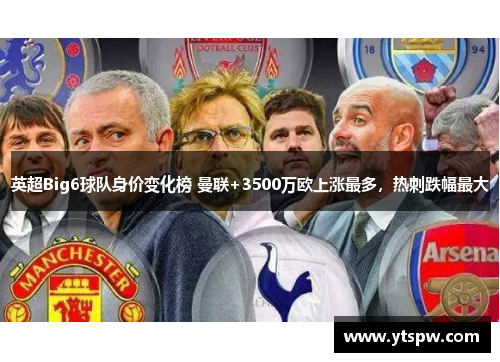
English Premier League Big 6 Team Valuation Changes: Manchester United rose by €35 million, while Tottenham Hotspur experienced the biggest decline. This article will delve into the reasons behind these fluctuations in player values.
Manchester United's impressive increase of €35 million in player valuation can be attributed to their strong performances on the field. The team's success in various competitions has boosted the market value of their players, attracting interest from potential buyers and investors.
The club's effective recruitment strategies and player development programs have also contributed to the rise in their players' market worth. Additionally, Manchester United's global fan base and commercial partnerships have enhanced their overall financial strength and stability.
Furthermore, the club's proactive approach in securing sponsorships and marketing deals has further bolstered their revenue streams, allowing them to invest in top talent and maintain a competitive edge in the transfer market.
taptapapp点点网Conversely, Tottenham Hotspur's marked decrease in player valuation can be linked to their underwhelming performances in recent seasons. The team's inability to secure silverware and achieve desired results on the pitch has led to a depreciation in the market value of their players.
In addition, Tottenham's limited success in attracting high-profile signings and retaining key players has further impacted their overall squad valuation. The lack of consistent performance and uncertain managerial changes have also contributed to the decline in the club's commercial appeal and financial standing.
Moreover, external factors such as the COVID-19 pandemic and its economic repercussions have put pressure on Tottenham's revenue streams and financial resources, affecting the club's ability to compete at the highest level and maintain the value of their players.
Liverpool's player valuation changes have been influenced by their consistent performance in domestic and international competitions. The team's strategic transfer policy and investment in top talent have enhanced the market worth of their players, making them valuable assets in the football market.
Furthermore, Liverpool's strong brand identity and successful commercial partnerships have positioned them as a financially robust club, capable of competing for top talent and maximizing their revenue potential. The club's innovative marketing strategies and global fan base have also contributed to their overall market value and commercial success.
Moreover, Liverpool's sustained success on the field and ability to attract top sponsors and endorsements have solidified their position as a leading football club in the English Premier League, driving up the value of their players and enhancing their financial stability.
Arsenal's market value fluctuations can be attributed to their strategic investments in player recruitment and development. The club's emphasis on nurturing young talent and promoting from within has led to a sustainable increase in the value of their players, creating a strong foundation for future success.
Arsenal's lucrative commercial partnerships and stadium revenues have also played a key role in boosting the market value of their squad. The club's focus on balancing financial stability with on-field success has enabled them to attract top talent and remain competitive in the transfer market.
Additionally, Arsenal's global fan base and digital marketing initiatives have enhanced their brand visibility and commercial appeal, further increasing the market worth of their players and expanding their revenue streams. Overall, Arsenal's solid financial foundation and strategic planning have positioned them as a formidable force in the English Premier League.
In conclusion, the fluctuation in player valuations among the English Premier League Big 6 teams reflects the complex dynamics of the football market. While some clubs have experienced significant increases in player worth due to on-field success and strategic investments, others have seen declines linked to underperformance and financial challenges. Moving forward, these teams will need to adapt to the evolving landscape of football economics to maintain their competitive edge and sustain long-term success.